

TECHNICAL ASSESSMENT
Measuring Electromagnetic Contamination indoors
Assess the levels of electromagnetic fields in your space and identify possible sources of exposure, with a technical, integrated and well-being-oriented approach.


UNDERSTANDING THE INNER ENVIRONMENT
What is electromagnetic contamination measurement?
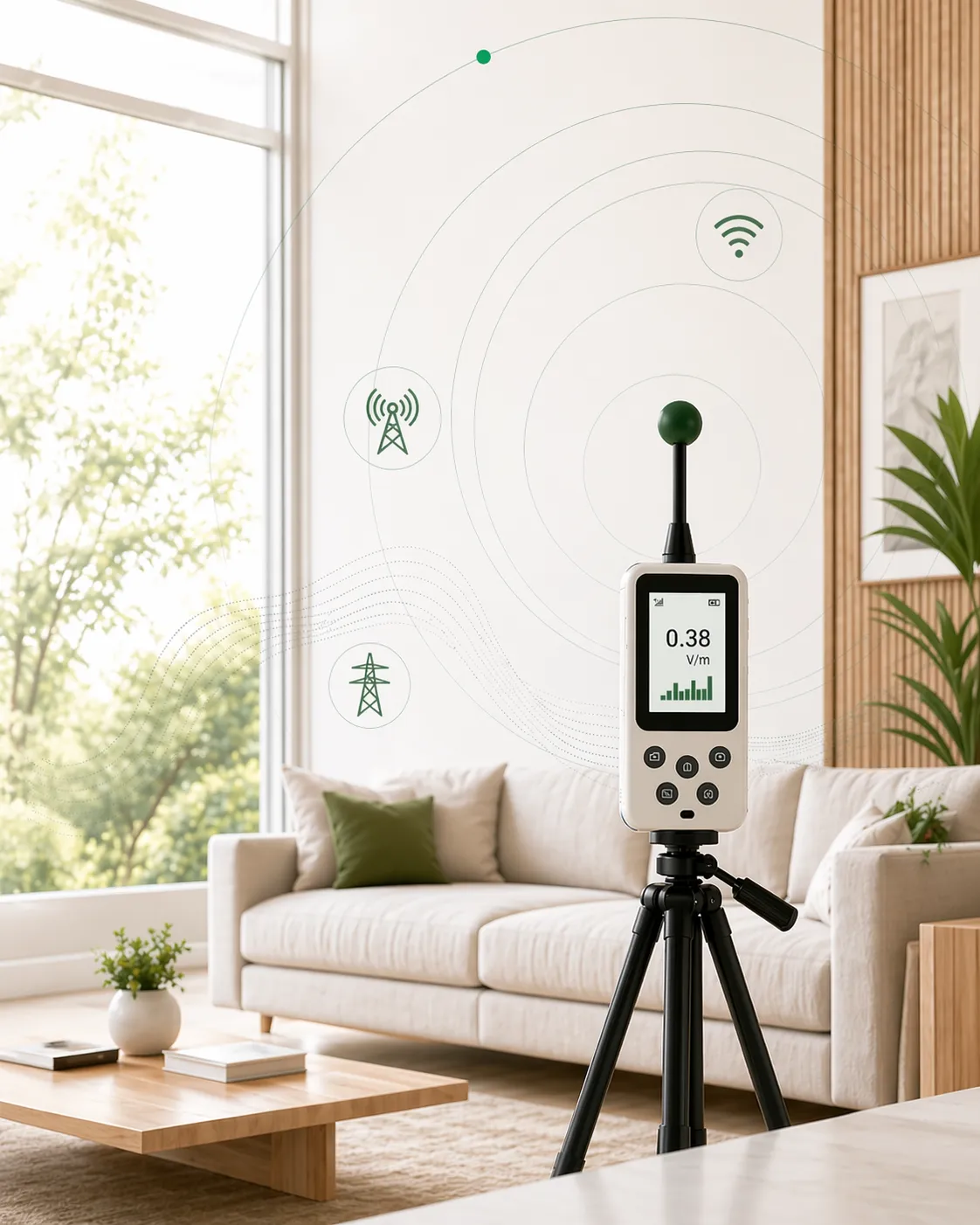
The measurement of electromagnetic contamination consists of assessing the levels of electromagnetic fields present in a space, coming from different sources such as electrical installations, equipment, Wi-Fi networks, power lines, transformers or telecommunications antennas.
This analysis makes it possible to understand the electromagnetic context of the indoor environment, verify existing values and identify opportunities for improvement to promote greater balance and comfort in the space.


Electrical installations

Wi-Fi equipment and networks
Power lines
Telecommunications antennas
Why is it important to evaluate electromagnetic fields in a space?
Getting to know your inner environment
Understand what types of electromagnetic fields are present in space.
Identify sources of exposure
Locate areas, equipment or installations that may be contributing to greater electromagnetic exposure.
Supporting improvement decisions
Reorganize the space, review technical solutions or adopt corrective measures when necessary.
Promote greater environmental comfort
Integrate this analysis into a broader approach to health and habitat quality.
What sources can be at the origin of electromagnetic contamination?


External sources
- High or medium voltage power lines nearby (overhead or buried)
- Electrical substations
- Transformer stations (PT)
- Antennas and telecommunications infrastructure
- Radars
- Neighbors' Wi-Fi networks
- Electrified transport

Internal sources
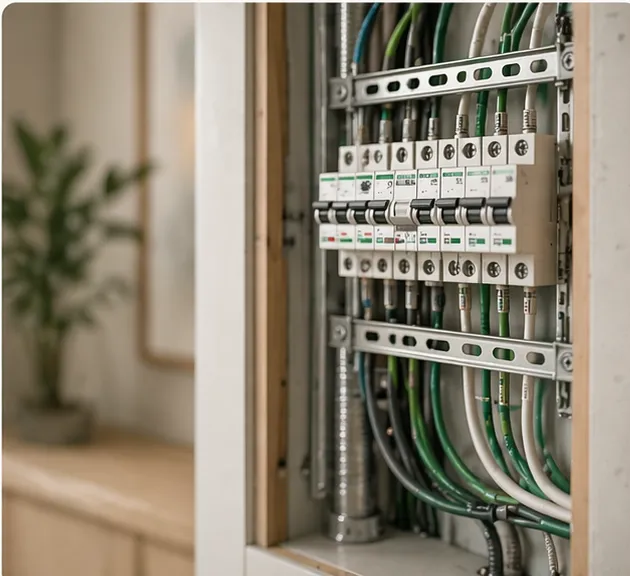
- Electrical panels
- Electrical wiring in walls
- Household appliances and electronic equipment
- Wi-Fi networks
- Cell phones and wireless devices
- Home automation devices

These sources are not always a problem, but their presence and location must be assessed in the specific context of each space.
Who can use this evaluation?
Buying property/land or renting
Before buying or renting a house or buying land for construction.
Construction and refurbishment
In construction, remodeling or decoration projects.
Balanced room
When you want to create a more balanced and protected room.
Work and/or health and well-being spaces
In workspaces or spaces dedicated to health, well-being or leisure, where environmental well-being is a priority.
Multiple technological sources
Before buying or renting a house or buying land for construction.
Habitat health
As a complement to a broader habitat health assessment.
People with health problems
People with symptoms and/or illnesses with no apparent cause.

How does measuring electromagnetic contamination work?
01
Initial analysis of the space
Understanding the context, the type of property and the client's main concerns.
02
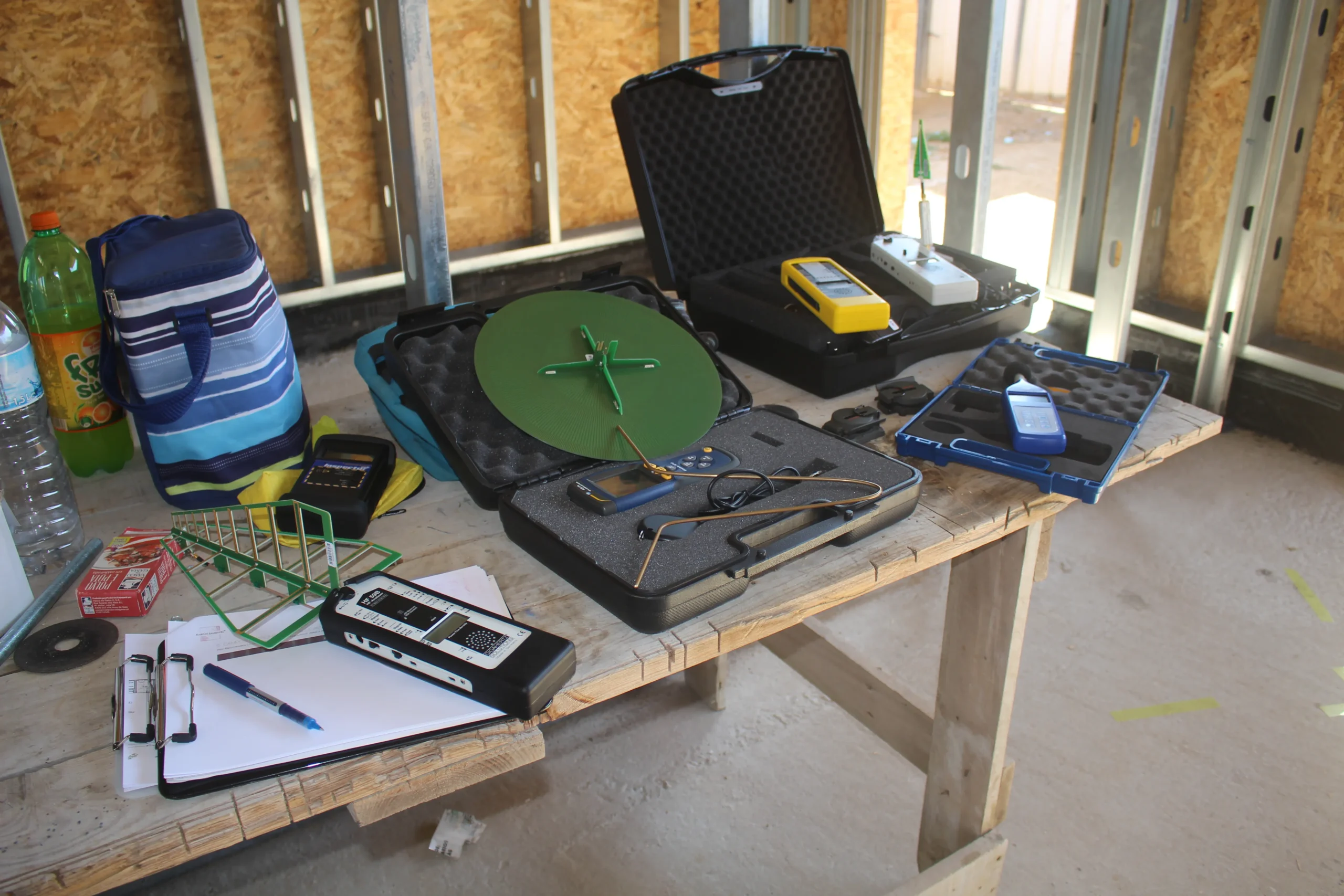
On-site measurement
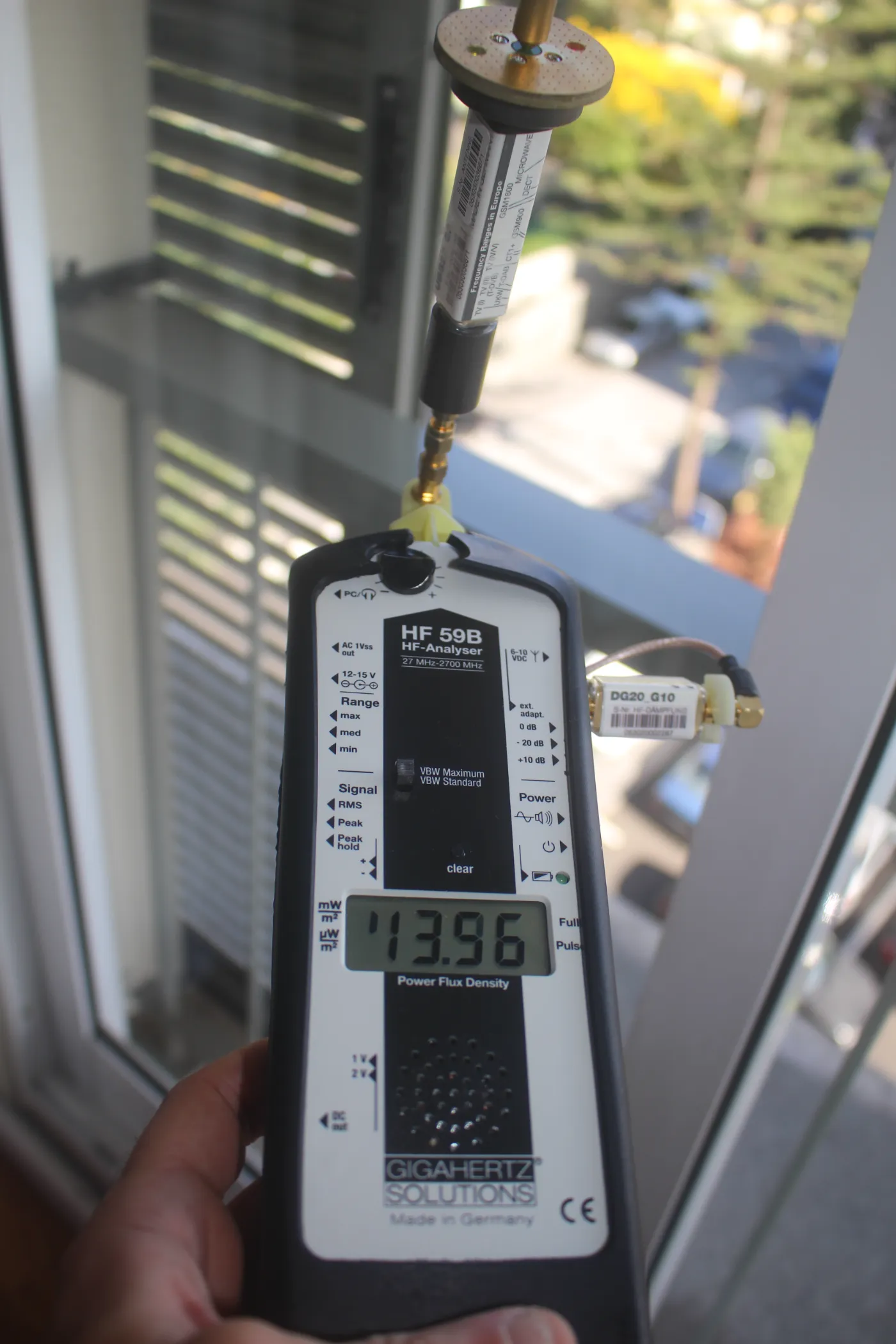
Technical assessment of the electromagnetic fields present in different areas of space.
03
Reading and interpreting the results
Analysis of the figures obtained and identification of relevant sources.
04
Recommendations for improvement
Where applicable, guidelines for optimizing the indoor environment are presented in a technical report with conclusions and recommendations.

Testimonial

Susana and Pedro
Vila Nova de Gaia
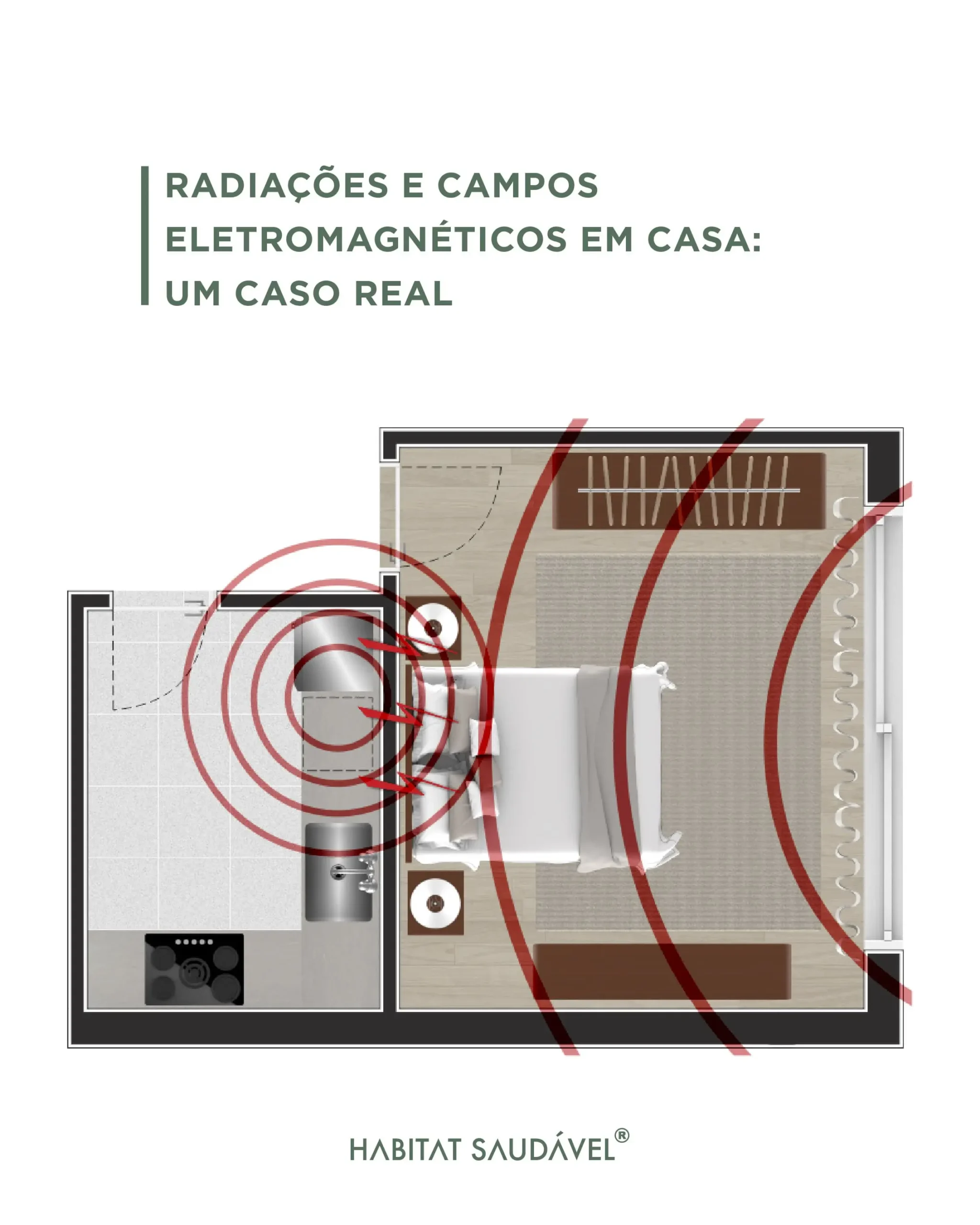
When planning the refurbishment of our family apartment, we asked Habitat Saudável to carry out a geo-environmental health study of the house. The diagnosis revealed a worrying situation, especially in the bedroom of our two children, aged 5 and 2. One of the first problems identified was the measurement of low-frequency alternating magnetic fields, whose values were clearly above those recommended by the WHO, and this type of exposure is associated with an increased risk of childhood leukemia.
Faced with this result, the solution was to move the children’s room into the former office space. However, the challenges didn’t end there. The new room was crossed by a Curry line and two intersections of Hartmann lines – geomagnetic networks with a geopathogenic character. It was explained to us that prolonged stay at these points, especially during sleep, can be associated in the medium and long term with changes such as sleep disorders, infertility, miscarriages, cancer, chronic fatigue syndrome, degenerative diseases or depression.
The solution was to reposition the beds to ensure that none of the children were exposed to these nets during their sleep. Knowing the truth about the house we live in isn’t always easy. But in the end, we had the peace of mind of knowing that we had made more informed decisions to protect our family’s health and well-being.

Susana and Pedro
Vila Nova de Gaia
At Healthy Habitat, we don't just measure.
We help you interpret the results and understand what they mean in the real context of your space. We combine technical knowledge with a broader vision of the health of the habitat, to identify opportunities for improvement that make sense for your day-to-day life, with practical, personalized recommendations aligned with inner well-being.
What sets us apart:

Integrated approach
Integrated approach to space and well-being.

Specialized knowledge
Geo-environmental health knowledge applied to habitat.

Personalized assessment
Personalized assessment, case by case.

Practical recommendations
Practical recommendations adjusted to the reality of the space.

UNDERSTANDING THE INNER ENVIRONMENT
Do you want to better understand the electromagnetic environment in your space?
Ask for an assessment and find out how to improve your interior environment in an informed way.

Frequently asked questions about measuring electromagnetic fields
What are electromagnetic fields?
These are “invisible” fields of energy generated by the combination of electric fields and magnetic fields, produced whenever there is moving electricity or electromagnetic radiation. They can vary depending on the type of device and proximity.
Is the measurement done in homes or also in workplaces?
It can be carried out on land, homes, offices and other indoor spaces.
Does having Wi-Fi or electrical equipment automatically mean there's a problem?
No. The assessment must be made on a case-by-case basis, taking into account the intensity, proximity and context of the space.
Does the measurement include recommendations for improvement?
Yes, the analysis makes it possible to identify opportunities for improvement in the interior environment or in the space to be rehabilitated and/or built.
Does this service replace other environmental assessments?
No. It can complement other analyses, such as indoor air quality, radon or other geo-environmental factors.

Evaluate your space in more depth
The quality of a space doesn’t just depend on what’s visible. If you want to better understand the levels of electromagnetic fields present in your home, office or other indoor space, Healthy Habitat can help with a technical assessment aimed at improving the indoor environment and the health of its occupants.