
Radiation and Electromagnetic Fields
Everyday discomfort doesn’t always have an obvious cause. In some cases, invisible environmental factors – such as the presence of electric and electromagnetic fields from electrical equipment, household appliances and nearby infrastructure – can contribute to a persistent feeling of unease in the home, especially in rest areas.
In this article, we share a real case described in our book, in which a couple is confronted with progressive symptoms and, after an analysis of the environment of the room where they have been sleeping for decades, different sources of artificial radiation are identified inside and outside the house.
The aim is to promote reflection and awareness about the importance of creating a healthier indoor environment, especially in the bedroom, where we spend several hours at a time resting.
A real case: when the bedroom becomes a risk factor
“A nice retired couple, after a lifetime of hard work with the aim of “enjoying life a bit”, to quote their own words, are confronted with a slow and gradual loss of memory. His wife thought that her husband had been a bit forgetful, but this simple and annoying forgetfulness quickly began to take on disabling consequences.”
Identifying sources of artificial radiation
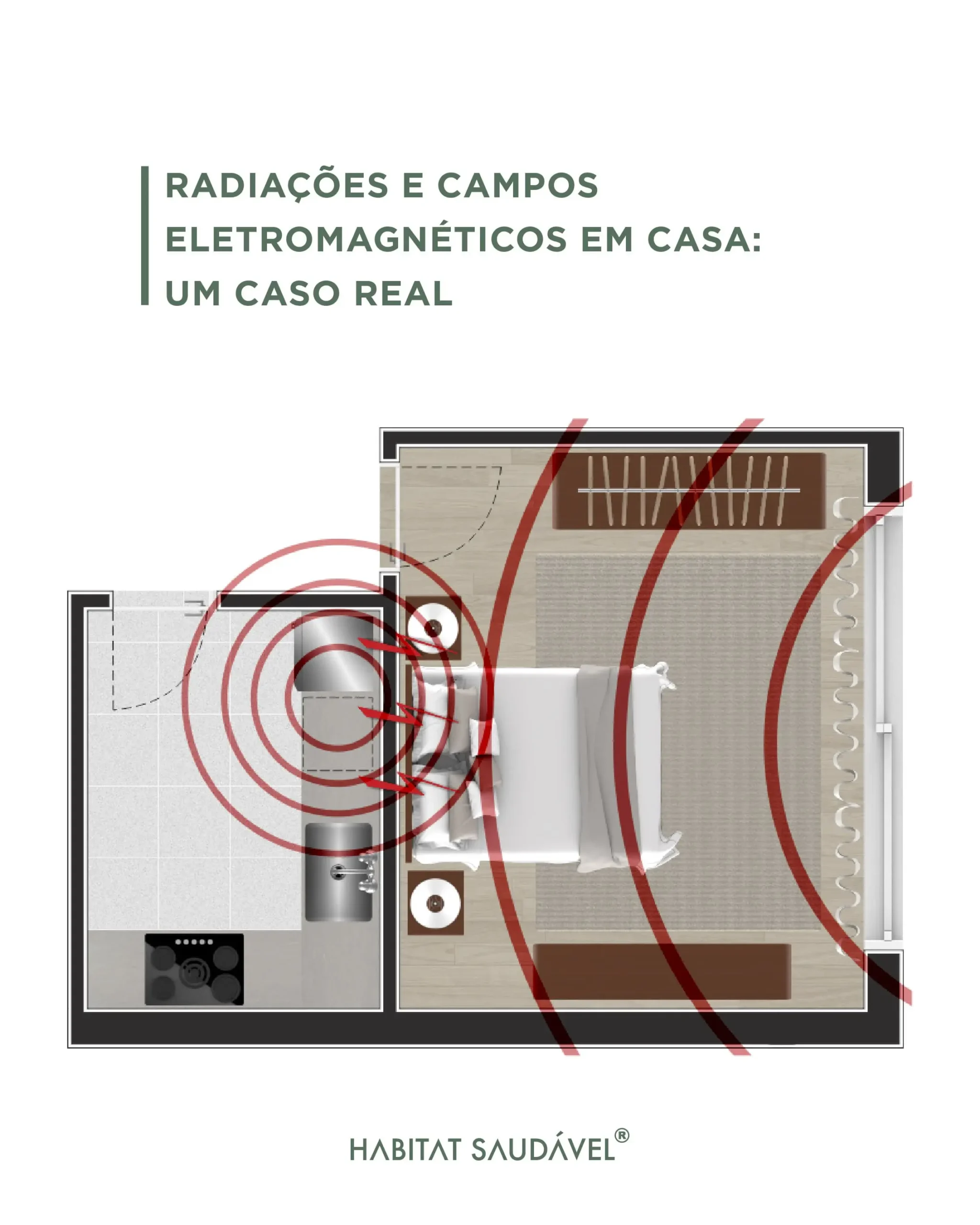
“When we analyzed the room where they slept for almost four decades, we found a variability of artificial radiation sources. Outside the house, a cell phone antenna was located approximately 150 meters away. Inside, we detected significant values of low-frequency electric and electromagnetic fields coming from some kitchen appliances (fridge and dishwasher working on a two-hour tariff) leaning against the wall next to the headboard of the couple’s bed, especially in the area where the husband slept (the wife also had constant headaches).”
The cumulative impact over the years
“Intense professional life (with daily use of industrial machinery) added up to years of using a blanket with electric heating and a mattress with an electric massage system. All elements that no longer exist, but which have been part of this couple’s daily life for many years.”
Small changes, big differences
“Faced with this, the couple moved into the guest room, away from the kitchen, where they put up a curtain to protect them from the radiation coming in through the balcony door from the cell phone antenna. Fortunately, in a new room and well medicated, the symptoms stabilized to the point where the couple could continue to live within what they understood as normality.”
Extract from the book “UMA CASA MAIS SAUDÁVEL UMA FAMÍLIA MAIS FELIZ” by Marcelina Guimarães and Miguel Fernandes, published by A esfera dos livros
Create a healthier indoor environment
This real-life case reinforces an essential point: the environment in which we live – and especially where we sleep – can have a significant impact on our well-being. Regardless of the specific cause of each situation, it’s important to look at the house as a whole and understand that there are invisible factors, such as low-frequency electromagnetic fields and other sources of exposure, which can be present without us realizing it.
In Portugal, more and more families are looking for solutions that contribute to a healthy habitat, with special attention to the bedroom, the arrangement of electrical equipment and the avoidance of unnecessary exposure during rest. The good news is that, in many cases, small changes in space and well-targeted technical decisions can make a real difference to quality of life.
If you are looking for a specialized approach to make your home more balanced and healthy, Habitat Saudável can help you assess your environment and implement strategies in line with the principles of Integrative Architecture, promoting comfort, safety and well-being on a daily basis.
READ ALSO
A sick house - Real case

FAQ - Frequently Asked Questions about Electromagnetic Contamination
1) What are electromagnetic fields at home?
These are “invisible” fields of energy generated by the combination of electric fields and magnetic fields, produced whenever there is moving electricity or electromagnetic radiation. They can vary depending on the type of device and proximity.
2) Why is the bedroom such an important area?
Because it’s where we spend several hours in a row resting, with our bodies in a more sensitive and exposed state for longer.
3) What are the most common sources of electromagnetic fields indoors?
Household appliances, electrical installations and/or wiring near the bed, chargers plugged into the mains and some equipment in continuous operation.
4) What can I do to reduce exposure on a daily basis?
Reorganize the bedroom, keep electrical and/or electronic equipment away from the bed and avoid using electronic devices while they are charging.
5) When should I seek a technical assessment of the environment?
When there is persistent discomfort with no obvious cause, or when the aim is to optimize the space based on environmental health criteria.